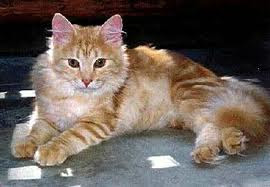
The Turkish Angora Cats have descended from the African wildcats. Traders from Egypt brought cats into Eastern Anatolia, where through natural choice and inbreeding, the Turkish Angora was developed along with the Turkish Van. The Turkish Angora was brought into Europe where it was brought almost to extinction in trying to improve the coat of the Persian cat. Today, the Turkish government runs a breeding program to preserve their national treasure.
Types of Turkish Angora Cats
You'll find no specific types of Turkish Angora Cats.
Physical Attributes of Turkish Angora Cats
The Turkish Angora have a silky longhaired coat, originally white. Nowadays, there's a massive range of colors in Turkish Angora cats which includes black, red, blue, lavender, smoke, and so on. The eyes of the Turkish Angora cats are blue, green or amber. Some Turkish Angora cats, nonetheless, could possibly be odd-eyed- i.e they've 1 blue eye and also the other green or amber. Their eyes are almond shaped and their ears are long and pointed. Their tail is plumed and they generally carry it upright, perpendicular to their backs.
Personality of the Turkish Angora Cats
The Turkish Angora cats are regarded as dog like in numerous aspects. They are outgoing, friendly and people-friendly. They're also playful and like the attention of individuals.
Caring for Turkish Angora Cats
Turkish Angora Cats need to have minimal grooming, except regular brushing due to the fact they're longhaired. It is essential to make sure common brushing specially in the course of summer months when they're shedding. Also, Turkish Angora cats are prone to deafness and genetic illnesses like Ataxia and Hypertrophic Cardiomyopathy.
The Turkish Angora (Turkish: Ankara Kedisi) is really a breed of domestic cat. Turkish Angoras are 1 of the ancient, naturally occurring cat breeds, getting originated in central Turkey, inside the Ankara (historically called Angora) region. The breed is also from time to time referred to as merely the Angora or Ankara cat, and in some obsolete works as the Angola
Turkish Angora Cats have a silky tail, medium-long length coat, no undercoat and fine bone structure. There seems to be a connection among Ankara Cats and Persians (see below), and also the Turkish Angora is also a distant cousin of the Turkish Van. Despite the fact that they are identified for their shimmery white coat, presently there are actually a lot more than twenty varieties which includes black, blue, and reddish fur. They come in tabby and tabby-white, together with smoke varieties, and are in every color apart from pointed, lavender, and cinnamon. Eyes might be blue, green, or amber, or even 1 blue and 1 amber or green. The W gene responsible for the white coat and blue eye is closely related towards the hearing ability, and presence of a blue eye can indicate the cat is deaf towards the side the blue eye is situated. On the other hand, an awesome lots of blue and odd-eyed white cats have typical hearing, as well as deaf cats lead a very typical life if kept indoors.
Ears are pointed and big, eyes are almond shaped as well as the head is enormous having a two plane profile. One more characteristic will be the plumed tail, which is typically carried upright, perpendicular towards the back.
History
Like all domestic cats, Turkish Angoras descended from the African wildcat (Felis silvestris lybica) isolated cats brought by traders from Egypt[citation needed] and eastern mountainous regions of early Anatolia and by way of inbreeding specifically with (Felis lynx) and natural selection they developed into longhaired breeds like the Turkish Van plus the Turkish Angora[citation needed].
Longhaired cats had been imported to Britain and France from Asia Minor, Persia and Russia as early as the late 16th century, although you will find indications that they appeared in Europe as early as the 14th century on account of the Crusades. The Turkish Angora was applied, almost towards the point of extinction, to strengthen the coat on the Persian. The Turkish Angora was recognized as a distinct breed in Europe by the 17th century.
Within the early 20th century, the Turkish government, in conjunction using the Ankara Zoo, began a meticulous breeding program to protect and preserve what they regarded as a national treasure: pure white Turkish Angoras with blue and amber eyes.The program continues currently. The zoo particularly prized odd-eyed Angoras . Turkish Angoras with one blue eye and 1 amber eye).The Zoo has its own cat facility which houses the white Turkish Angoras for its breeding program.
The Turkish Angora, which was brought to the United States in 1963, was accepted as a championship pedigreed breed in 1973 by the Cat Fanciers' Association.Nonetheless, until 1978 only white Angoras had been recognized. Today, all North American registries accept the Turkish Angora in lots of colors and patterns. While numbers are still comparatively modest, the gene pool and base of fanciers are growing.
Well being considerations
Some Turkish Angora kittens suffer from ataxia, a rare condition which is thought to be inherited as an autosomal recessive.The kittens affected by ataxia have shaking movements, and do not survive to adulthood.
One more genetic illness that is rare but identified towards the breed is Hypertrophic Cardiomyopathy,which is actually a cardiac condition normally found between the ages of two - 6, with males becoming affected additional commonly and additional severely than females.
In the Maine Coon cat, HCM is thought to be an autosomal dominant gene and researchers are working to identify markers for this disease. Nonetheless, inside the Turkish Angora, the disease has not but been studied at length primarily on account of its rarity of occurrence, and is most likely to result from a various mutation of genes, having a various gene location than that of the Maine Coon cat. HCM also affects several other breeds, which includes Ragdolls, to Persians and Bengals
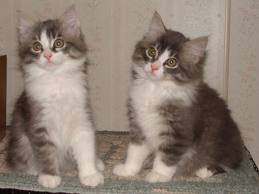
The Siberian is really a domestic cat breed that has been present in Russia for centuries. The full name of the cat will be the 'Siberian Forest Cat' while often referred to as the 'Siberian' or the 'Siberian Cat'. The cat is an ancient breed which is now believed to be ancestral to all modern long-haired cats.The cat has similarities using the Norwegian Forest Cat, to which it really is most likely closely related.It is a natural breed as well as the national cat of Siberia.
There are actually claims that it really is hypoallergenic and produces less Fel d1 than other cat breeds.
History
The cat was very first mentioned in a book by Harrison Wier, which included data of the earliest cat shows in England in 1871.The cat was initially imported to the United States in 1990 and, despite the recognition, the breed is rare within the US. The cat was registered by the Kotofei cat club in St. Petersburg in 1987. A Siberian cat, Dorofei, is owned by Russian president Dmitry Medvedev and one more by former Soviet president Mikhail Gorbachev.WBZ-AM talk radio host Steve LeVeille mentions his Siberian "Max" on his Boston-based program.
Characteristics
The Siberian is very dog-like. They are loyal cats that may come to greet you. This cat breed appears to be fascinated with water and they are likely to drop toys in it. They're a friendly breed, good with dogs, energetic, and smart.They tend to be a talkative breed, including commenting with brief soft mewing sounds when they encounter an object of interest, or pleading for a door to be opened at night so that they can sleep having a preferred person. Living indoors in harmony with other people has given rise to quite a few of their traits. With their distinctive triple fur, they are adapted well for cold environments. Siberians are frequently found outside their owners' homes in heavy ground snow, peacefully sheltering under some old boards.
Body
Identified to be an exceptionally agile jumper, the Siberian is really a powerful and powerfully built cat, with strong hindquarters and big, nicely rounded paws. They've barrel chests and medium sized ears, broad foreheads, and stockier builds than other cats
Hypoallergenic qualities of the Siberian coat have already been noted and commented on for practically ten years. Though there is small scientific evidence, breeders and pet owners claim that Siberians could be secure for lots of allergy sufferers. Considering that females of all feline breeds create lower levels of Fel d1, breeders generally recommend that allergic families adopt female cats. Allergy sufferers are advised to check their reactivity directly using the parent cats from whom they program to adopt a kitten.Many persons think that the breed produces much less Fel d1, the main allergen present on cats.
In 1999 Indoor Biotechnologies tested the fur of 4 cats for Fel d 1; a mixed breed, two Siberians, and an Abyssinian.The results showed the Siberian and Abyssinian cat fur as having lower Fel d 1 levels than the mixed breed cat.Indoor Biotechnologies cautions that the Siberian levels were still high, and that the mixed breed sample was "exceptionally high." Indoor Biotechnologies warns against employing these outcomes to create decisions of pet ownership.
This test of fur allergen levels is cited by many Siberian breeder websites as evidence the breed is hypoallergenic. Critiques include that the sample size is below statistical significance, was submitted by a Siberian breeder, and as mentioned, 1 cat was identified to have Fel d1 allergen levels of 62,813 micrograms (roughly 60x greater than any published skilled study).
A not-for-profit association of breeders, (Siberian Study Inc), was founded in 2005 to study allergen levels and genetic illnesses inside the Siberian breed. As of March 2010, fur and saliva samples from over 300 Siberians have already been submitted for analysis, many directly from a veterinarian. Salivary Fel d1 allergen levels in Siberians ranged from 0.08-27 mcg per ml of saliva, though fur levels ranged from 5-1300 mcg. The high-end of these ranges is consistent with outcomes from prior studies, although the low finish is below expected results.
All Siberians tested had been identified to produce some Fel d1, using the highest levels getting discovered in Siberians that with silver colored fur. About half of Siberians were located to have Fel d1 levels lower than other breeds, although under twenty percent could be considered really low. Within the low group, males and females had comparable allergen levels.
Siberians express the 3 natural forms of feline fur: guard hairs, awn hairs, and down. These 3 layers defend the cat from the Russian weather extremes, and give a hardy, quick to care for coat nowadays. The fur is textured but glossy, which decreases the occurrence of matting. A twice weekly combing is sufficient to help keep the coat in superior condition.
As with most other cat breeds, color varieties of the Siberian vary and all colors, which include tabby, solid, tortoiseshell and colorpoint are genetically achievable. The Siberian cat breed does not have any unusual, distinct, or distinctive fur colorations or patterns.
Most breeders, enthusiasts, organizations, key registries for instance TICA and the WCF, and countries accept the color point coloration as being natural. Color point Siberians are also recognized as "Neva-Masquerade": Neva for the river where they're said to have originated, and masquerade, for the mask-like coloration.
Siberian cats molt as soon as or twice a year. The very first molt is in the end of winter. The winter molt is instigated not by a change in temperature but by a alter in day length. Quite a few Siberians will expertise a less intense "mini molt" at the finish of the summer season.
The Siberian cat is often a Russian cat that originated in Russia. The cat adapted to living in cities and urban areas when folks migrated towards the cities. The Siberian is Russia’s national cat. The Siberians initially arrived in 1990 towards the United States. In cities where the Siberian cat is discovered, it is achievable to mix with other feral cats. The Siberian has been accepted by the Feline registries.
The Siberian cat is an agile jumper, and is really strongly built, major and effective. It has rounded paws which are substantial and strong hindquarters. The Siberian cat has ears of medium size, barrel chest, broad foreheads and are built stockier which differentiates them from the Maine Coon plus the Forrest cart breeds. It weighs in between eleven to fifteen pounds in males and in female cats the weight is 9 to 12 pounds. Its key characteristics are being barrel chested and heavy boned cats. The Siberian cat takes as a lot as 5 years to grow to be a full grown mature cat.
Attributes Of Siberian Cat Breed
Siberian cats possesses dog like devotion attributes for example getting loyal, affectionate, playful and intelligent. It is referred to as a gentle giant and enjoys the firm of other pets and folks. Siberians adore to purr, they are quiet and mellow and particularly personable in nature. They are energetic and athletic creatures and extremely gentle around children.
3 Sorts of Fur Of Siberian Cat
The Siberian cat has three kinds of fur called guard hairs, awe hairs and down. Given that it was initially a Russian cat these hairs supplied protection in the course of cold times even though having a coat quick to care for. The fur is glossy and textured and matting of fur is rare. The Siberian too is of lots of colors such as Tabby, colorpoint and tortoiseshell. Their fur coat is not produced up of unusual colorations and patters. Siberians of color point are called Neva-Masquerade. Neva indicates the river which they originated from, and masquerade is for the mask.
The Siberian is reputed to be hypoallergenic, but unproven and it has been commented on for at the least ten years. Scientific evidence is small in this regard, and female felines tend to affect allergy sufferers. Siberian cats tend to reproduce in as young as 5 months. Feral cats tend to die young. A Siberian cat litter consists of in between 5 and 6 kittens in comparison to a litter of three kittens on typical. The Siberian cat father assists with kitten care as it really is commonly identified and makes superb parents.
Reproduction
Siberian cats tend to come into reproductive readiness earlier than other breeds, sometimes as young as five months. It is thought that this is related to the breed's closeness to its natural wild state. Feral cats often die young due to harsher natural conditions. Achieving reproductive capacity early and having large litters provides a biological balance to this. On typical, a Siberian litter consists of five to six kittens, as compared to the average litter of 3 to four kittens in breeds who've been registered as pedigreed cats. On the other hand, Siberian litters may possibly consist of as few as one and as quite a few as nine kittens.
Siberian cats are superb parents, with the fathers helping to care for kittens if they're allowed access to the nest. Parents are usually strongly bonded and some mothers will only mate with one male. Atypical for cats, teenage male Siberians have been noticed cuddling and grooming their cousins and siblings. Siberians, on account of their communal nature, typically do greater in pairs in captivity.
If a Siberian isn't desexed, some queens (females) have been noted to have litters as late as nine or ten years. On the other hand, kitten mortality is generally lower when the queens are in between 18 months and 5 or six years of age. This is on account of numerous elements: physical and emotional maturation of the female, well being and vitality of the queen, and a natural predisposition to healthier offspring from younger mothers.
Males can father kittens from as young as 5 months to over ten years. In regions where the breed is rare and high priced a long term breeding career for a pedigreed male can create a risk of Preferred Sire Syndrome, in which 1 male has an overly big genetic influence on the breed. In Eastern Europe, where the breed is extremely popular and much less high-priced, this problem is much less likely to arise.
Throughout the early 1990s, catteries in Russia had limited foundation stock plus the number of Siberians that had been exported to Poland, Germany, Scandinavia along with the USA was limited. Even though inbreeding was popular, the robust health of the breed decreased the likelihood of genetic defects. One exception is Hypertrophic cardiomyopathy (HCM) in nearly all lines of "golden" Siberians. The pedigree link shows a queen that died from HCM and illustrates the level of accepted inbreeding.
Siberians are essentially a pretty wholesome breed, although many lines have already been impacted by one or a lot more genetic diseases. Essentially the most typical are HCM, and Persian kidney disease (PKD-1). In an effort to decrease genetic disease in Siberians, quite a few organizations maintain open-source reports of Siberian HCM and PKD, offering breeders details about high-risk lines.
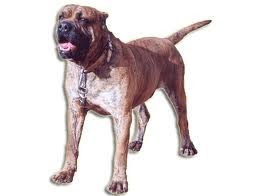
Alano Español, often named the Spanish Bulldog in English, can be a extremely big breed of canine of the molosser puppy kind, originating in Spain. The breed is very best known for its former use during Spanish bullfights.
The Alano Espanol is usually a molosser (a significant durable canine whose origins are in Molossia). It's got a primitive appearance whose standard physiology suits him specifically properly for managing at substantial speeds for lengthy intervals of time and firmly holding wild sport or cattle for some time when ordered. With a well proportioned body framework, the rib cage is arched, not cylindrical, the chest reaches the elbows stage, with powerful and solid shoulders and withers. The entrance legs are more powerful compared to again ones, and so are straight irrespective of whether viewed through the entrance or through the side.
The paws are usually a lot greater than all those of other dogs in the similar dimensions and body weight. The profile from the Alano's backbone outline is a little bit ascending towards the again conclude or, not less than, straight, although not descending. The muscle mass within the hindquarters are very well produced and also the back again legs exhibit incredibly nicely defined angles ending in sturdy ft. The tail is thicker at the base tapering into a point and is in no way cropped due to the fact it's used as a rudder inside dogs sharp turns and dribbles when hunting or doing work with half-wild or wild cattle. Once the tail is carried small, none of its size rest towards the canines hind region. The stomach is retracted inwards providing him a extra athletic appearance than other heavier molosser breeds. The neck is robust, potent and wide, showing two double chins that will need to never ever hang to lower. His head is brachycephalic (Bulldog variety) in form, squared in visual appeal and by using a really serious expression.
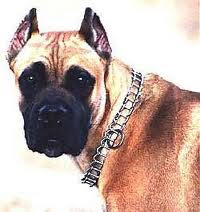
The muzzle is wide and represents somewhere around 35% from the whole size in the head, which has a vertical avoid. The nose is substantial, huge and black with open nostrils. The ears are often cropped, a little rounded on the tip. Uncropped ears are medium in size and carried folded through the experience. The Alano has incredibly effective jaws. The teeth are wide, very well separated from one another by using a extremely powerful and firm scissors bite or inverted scissors bite. An under-bite is permitted if it really is 2 mm or much less.
When walking the Alano has the stride of the sly panther, because of its behavior of carrying his head very low, somewhat and slowly bouncing it from aspect to side doing its formidable shoulders much more visible. Alanos are tireless molossers that could manage a continuing, graceful, agile trot for a long period. When galloping, they may be quickly and versatile, absolutely stretching in and out their total human body in each and every action. Sorting hurdles with huge agility, producing it search as if they'll never get drained whether or not they had been demanded to take care of the gallop for miles. Coat colours involve yellow and wolf grey, fawns and reds (in possibly mild or dark tones), with or without having tigering (brindling) and or black mask. Black & tan-always with tigering on the tan markings which is described from the Spanish standard as "negro y atigrado" translating as black & tigered. White markings are allowed, but only on the snout, neck and chest, lower legs, belly and at the suggestion from the tail, the white really should certainly not predominate the human body.
Temperament
The temperament of the Alano is really dominant and critical but really controllable by his master, acting submissively towards him/her. This breed is really affectionate with the family and people they know. It really is also extremely patient and good with children. They are reliable, stable, incredibly obedient and bark incredibly little. However, the Alano will watch strangers with suspicion, attacking with little warning, only when the situation requires it. When holding wild animals with it's jaws, regardless in the measurement, nature, or aggressiveness in the animal, the Alano totally ignores feelings like pain or fear and will not surrender until he is told to do so or until he achieves the orders given. The Alano will fight to the death to follow orders, fighting the wild boar or the bull until the end. They are a fearless, loyal, devoted, hard worker. Well-balanced & stable, self-confidant having a extremely superior pain threshold. Highly effective and protective, although not aggressive. These characteristics of the breed are not completely apparent until the animal reaches full maturity, which normally happens if the canine reaches two 1/2 years old or older. Simply because this breed is bred to function in packs being a team, he is good and sociable around other canines. Enjoying a good romp, playing and just having fun. However, the Alano will not again down if challenged by them. The Alano Espanol, like all mastiff sort breeds, ought to have a dominant owner who understands instinctual canine behaviors. They can climb trees with amazing cat-like agility and therefore are capable of leaping to great heights from a stand-still position. The Alano can be difficult to housebreak, which makes this breed very best as an outside puppy. Male Alano puppies tend to chew and be far more destructive than female Alano puppies. The objective in training this canine is to achieve a pack leader status. It is a natural instinct to get a canine to have an order in their pack. When we humans live with dogs, we become their pack. The entire pack cooperates underneath a single leader. Lines are clearly defined. You and all other humans MUST be higher up within the order than the dog. That is the only way your relationship can be a success.
Health Problems
This breed has never been a bred for looks. Instead it's an ancient rustic canine that has been utilized to work hard in the country underneath rough conditions for ages, where only the fittest would survive. This may be the reason for the Alano Espanol being an extremely resistant, healthy breed, not prone to suffer from any disease in particular. The owner of Curro states, "When injured or ill, their recovering time is also outstanding. For example: At the age of 80 days Curro caught parvovirosis (Parvo virus in Spanish). The veterinarian gave me no hope for Curro to live far more than a week after detecting the virus. It only took him 5 days to cure himself." Along with the Cane Corso, the Alano is one on the very few molosser breeds that do not drool, slobber or snore.
Living Conditions
Best suited to live in a yard and sleep outside, the Alano can stand hot and cold temperatures, dryness and humidity with no problem. For example: all through inland Spain winters, the temperature reaches in the lower 30's to the higher 20's (below zero Celsius). Within the North of Spain, the humidity is extremely higher. Within the central location the irrespective of whether is dry with cold winters and extremely hot summers, whereas the south could be dry or humid (depending on the province) but with mild to hot temperatures. The Spanish Alano always sleeps outside and will adapt to all these climates with no problem.
Exercise
If they may be not being used as operating dogs, but are a family pet, you need to give them a lot of daily exercise. A minimum of three walks daily, one of them a bit longer in an open space where they can run and play, ideally while in the country.
Life Expectancy
About 11-14 years.
Grooming
The Alano is often a short haired dog that requires little grooming. An occasional brushing having a rubber brush will helping him to shed his coarse, rustic hair and will prevent him from dropping a lot of hair inside the house. However he is an outside puppy and really should be outside the house most in the time. Bath only when necessary as it will remove the natural oils within the skin. This breed is an average shedder.
Origin
The Alano is usually a pretty ancient breed. There are several theories concerning it's origin. Most people relate today's Spanish Alanos to the dogs the Alanos (Alans) brought with them when they invaded the Iberian Peninsula in 406 AC. These canines did not originate from any breed regarded today, but instead, was the ancestor of, many on the molosser breeds that are pretty popular today, such as Great Dane or the Dogue de Bordeaux. There applied to be Alano canines not only in Spain, but in other places across Europe invaded by the Alans, however, only in Spain have they survived for much more than 1500 years until the present time. A group of Alano enthusiasts spent a lot of their time inside early 1980's doing work in direction of the goal of finding out the exact demographic situation of your Alano. The breed was in no way in canine shows or bred for beauty. For the time everyone thought the Alano had probably disappeared from most from the wild boar hunting expeditions and cattle ranches of Spain. Carlos Contera and his colleagues thoroughly searched all of rural Spain looking for this legendary molosser, whose decline started when its participation in bullfights was banned in 1883. The search was a success. They found a few Alanos in Extremadura (Southwest of Spain) and Castille (central plateau) but also a sizable and stable population of about 300 Alanos in the Encartaciones Valley in Northern Spain. These ended up exactly the same Alano dogs that had been used for centuries to handle a local 50 % wild breed of cows. The restoration of your breed started from your very best of these Alanos. Their DNA was analyzed by the Faculty of Veterinary Medicine from the University of Cordoba to assure their authenticity. The Spanish Alano, from the past, has been utilized in four basic purposes:
Wild or Half-wild Cattle handling.
Bullfights (this use was banned by the Spanish laws again inside the 19th century)
Big-game hunting.
Guard and defense.
War
Today it truly is utilized for cattle handling and hunting only. When operating, the Alano Espanol depends on its effective bite, its obedience and its well-balanced personality. The grip of your Alano Espanol's jaw has become legendary. It is actually extremely effective not only simply because the canines bite using the entire jaw, extending the grip back to the molars, steadily and maintaining it for a long time, but also simply because they are going to release the prey when there're told to do so. The release is as important as the holding when functioning with the dogs. Some from the Alano's talents consist of herding, hunting, tracking, watchdog, guarding, police work, Schutzhund, bodyweight pulling, competitive obedience and agility.
Group
Mastiff
Recognition
BBC, DRA - There are several other associations operating on its recognition, which soon will take place at a local degree in Spain.
Visual appeal
The Alano Español is usually a pretty large puppy of your Molosser sort, with a substantial, solid head. Males should be no smaller than 58 centimetres (23 in) in the withers, and ought to weigh 34-40 kilograms (75-88 lb) with females somewhat smaller.
The coat is short and thick but never velvety, and is most often a brindle of any color; leonado(fawn);black and brindle; sable wolf. White chest flashes are acceptable but prevalence of white is not. The encounter may or may not have a black mask.
The muzzle is short with the lower jaw marginally concave, and features a pretty big, broad, black nose. The ears are set significant and may be drop or cut short. The skin is pretty thick, with neck folds and some wrinkles on the experience.
Maintenance
On account of the Alano Espanol’s short hair, he needs extremely little grooming. Brushing the coat with a rubber brush can help the shedding process and prevent him from losing excessive amounts of hair indoors. To prevent removing natural skin oils, an Alano Espanol will need to be bathed only as necessary. There're average shedders. Alano Espanols need rigorous exercise, as they're a breed designed for work-related purposes. If kept being a family pet, an Alano Espanol should be walked daily and permitted to run free for just a substantial part on the day.
History
The name in the breed comes in the Alani, nomadic pastoralists who arrived in Spain as part in the transhumance from the 5th Century. These peoples were acknowledged to keep big livestock guardian dogs and pursuit dogs which became the basis for the many regional Alaunt types. The first formal, written reference to the breed in Spain is in a chapter in the 14th century "Book with the Hunt of Alfonso XI" (Libro de la Montería de Alfonso XI) in which hunting dogs termed Alani are described as having beautiful colours.Dogs of this sort traveled with Spanish explorers and were applied as war canines (as was their role in Eurasia before migration) while in the subjugation of Indian (Native American) peoples, as nicely as from the capturing of slaves.
Bull baiting done inside bullfighting ring with dogs of this kind was recorded by Francisco de Goya in his series on La Tauromaquia in 1816.Besides their use from the bullring Alanos ended up also made use of for hunting big video game such as wild boar.
The massive dogs began to disappear as the work they did began to change. Big online game became rare, stockyards ended up modernized and no longer employed dogs to hold the cattle, use in bullfights was outlawed, and by 1963 Alanos have been thought to be extinct. From the 1970s a group of fanciers and veterinary students made house-to house surveys in western and northern Spain, and found a few examples of your dogs inside the Basque areas of Enkarterri and Cantabria, being utilized to herd semi-wild cattle and hunt wild boar. A standard was written and the canines have been documented and bred, and also the Alano Español was recognised as independent breed by the Spanish Kennel Club in 2004, though earlier studies in the University of Cordoba clarified the Alano as distinct from any other breed at genetic level. The Spanish Ministry of Agriculture (Ministerio de Agricultura, Pesca y Alimentación) recognises the Alano Español as an indigenous Spanish breed.
Although the breed in Spain is still small in number as well as the breed has not yet been recognised internationally by the Fédération Cynologique Internationale, examples in the Alano Español have been exported to North America, where a few breeders are promoting for temperament and hunting ability.
Huge dogs that are similar in appearance and may share the history with the Alano Español involve the molossers of your Canary Islands such as the Dogo Canario (Perro de Presa Canario) as well as the Mastín Español (Spanish Mastiff) The Cimarron Uruguayo is often a South American breed that also looks somewhat similar, and is descended in the canines with the Spanish explorers and conquistadores. The breed is also from time to time termed the Spanish Bulldog in English. English canine dealer Bill George imported a dog he identified as "Big Headed Billy" in 1840. He was employed to increase dimensions in English Bulldogs.
Alano Espanol, Dogo Argentino, Presa Canrio - walk Videos :